
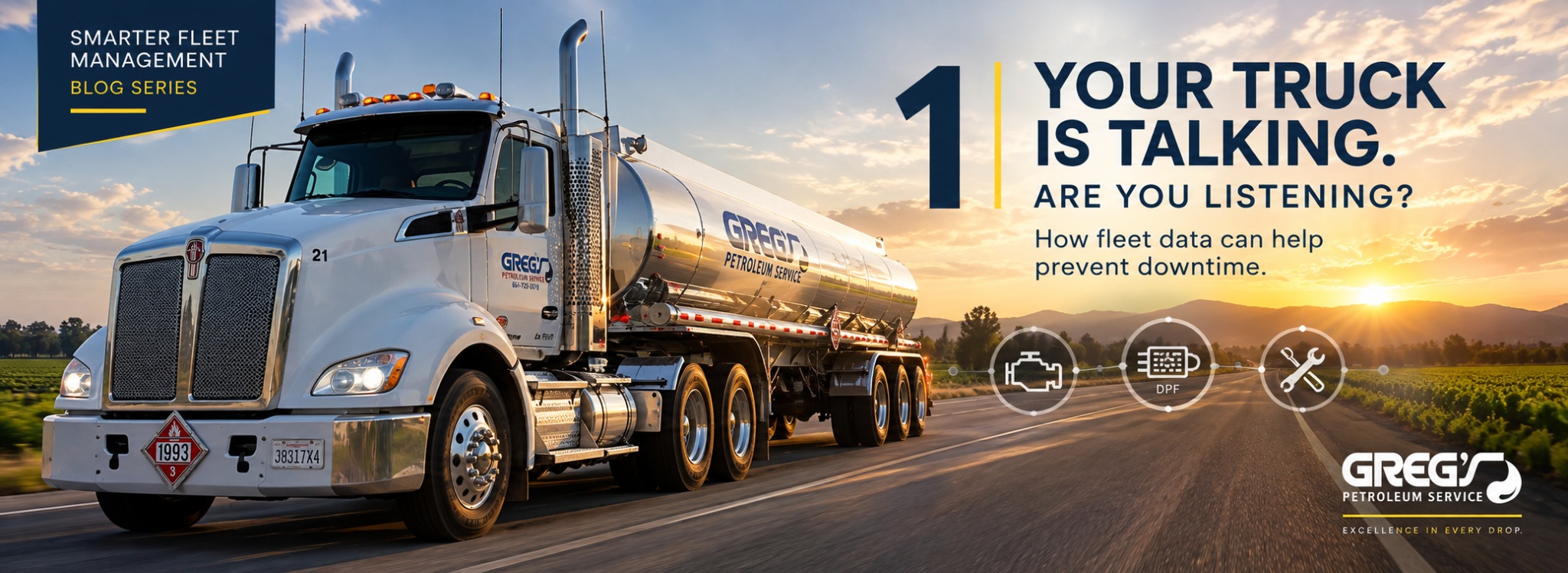
How Fleet Data Can Help Prevent Downtime
For any fleet, downtime is expensive. When a truck is sitting in the shop instead of on the road, it can mean delayed deliveries, lost productivity, unexpected repair costs and added pressure on the rest of the fleet.
That’s why preventive maintenance has always mattered. But today, fleet managers have access to something that can make preventive maintenance even more effective: real-time vehicle data.
At Greg’s Petroleum Service, we’ve implemented the Samsara platform across our own fleet to give our team greater visibility into our trucks, drivers and day-to-day operations. One of the capabilities we’ve found especially valuable is the amount of information the system can provide about the truck itself.
Instead of relying only on mileage intervals, driver observations or waiting for a problem to become obvious, telematics can help fleets better understand what is happening with their equipment while it’s operating.
From Reactive Maintenance to Proactive Maintenance
Traditionally, some vehicle problems are discovered because a driver sees a warning light, notices a change in performance or brings the truck back to the shop with an issue.
Connected fleet technology adds another layer of information.
Samsara’s Vehicle Gateway includes maintenance schedules and alerts alongside information such as real-time GPS, routing, fuel and idling reports and other vehicle data. Samsara describes vehicle-health monitoring as a way for fleets to help minimize downtime and avoid breakdowns.
For our team, that visibility can include useful information such as DPF status, warning lights and other vehicle information that can help us better understand what is happening with a truck.
Consider the DPF, or diesel particulate filter. A DPF issue that goes unnoticed can eventually become a much bigger operational problem. Having greater visibility into what’s happening with that system gives a fleet another opportunity to address a developing concern before it results in unexpected downtime.
The same principle applies to other vehicle warnings and maintenance needs.
The earlier you know, the more options you have.
Data Doesn’t Replace Maintenance—It Makes Maintenance Smarter
Technology isn’t a replacement for a good preventive maintenance program.
Oil still needs to be changed. Grease still needs to be applied correctly. Coolant needs to be maintained. Filters need attention. Equipment needs inspections. Manufacturer-recommended service intervals still matter.
What data can do is provide additional context.
Rather than looking only at a number on an odometer, a fleet can have a clearer picture of how a vehicle is actually being operated and what the truck may be reporting.
That’s especially important because two trucks with similar mileage don’t necessarily experience identical operating conditions.
Idle time, engine hours, routes, load, driving behavior and duty cycle can all look different from one vehicle to another. We’ve discussed this before when talking about why engine hours can be an important maintenance metric, particularly for vehicles and equipment that spend significant time running without accumulating highway miles.
Telematics adds another layer to that conversation.
One Platform, A Bigger Picture
Vehicle health is only one part of what modern telematics can provide.
Samsara’s platform combines information related to maintenance, safety, compliance, security and fuel/energy management.
That means a fleet manager can begin connecting information that might otherwise live in separate places.
Is one truck idling significantly more than another?
Are certain vehicles accumulating engine hours faster?
Are maintenance alerts appearing?
Are there driving patterns that could be putting additional stress on equipment?
Instead of looking at each issue separately, connected fleet data can help provide a more complete picture of how vehicles are being used.
Why This Matters to Greg’s Petro
As a fuel and lubricant supplier, we spend a lot of time talking with customers about protecting equipment, controlling operating costs and reducing downtime.
Those same priorities matter in our own operation.
Our trucks are how we get fuel and lubricants where they need to go throughout Central California. Keeping those trucks operating safely and reliably directly affects our ability to serve our customers.
Implementing Samsara is one more tool we’re using to better understand our fleet and make informed decisions about maintenance and operations.
And the technology we’re using isn’t exclusive to a fuel distributor. Contractors, agricultural operations, trucking companies, service fleets and other businesses operating multiple vehicles can use the same type of information to gain greater visibility into their equipment.
Better Information. Better Maintenance Decisions.
No technology can eliminate every breakdown or maintenance issue.
But having better information can help fleet managers identify potential problems earlier, plan maintenance more effectively and better understand how their equipment is actually being used.
Sometimes, your truck may be telling you there’s a problem long before it ends up on the side of the road.
The question is whether you have the tools to hear it.
Want to learn more about the fleet fueling technology we’re using at Greg’s Petroleum Service? Talk with your Greg’s Petro representative about Samsara and how connected fleet data could benefit your operation.